

M.A.T.E. Module 2: The perfect initial post
This course provides the building blocks to become a better prescriber and a better clinician when it comes to appropriate postoperative pain management.
This course provides the building blocks to become a better prescriber and a better clinician when it comes to appropriate postoperative pain management.
In this Module 3 of the 4 part series of the MATE act, we will discuss how to effectively manage intraoperative dental pain with local anesthesia. Achieving profound and effective local anesthesia is...
This course highlights different types of common radiolucencies and includes an in-depth analysis of oral cancer. Learn how and when to biopsy a lesion.

Significant bias for use of CPAP therapy to manage obstructive sleep apnea has resulted in a polarized, “one treatment” approach.
This course allows the general practitioner to survey the current landscape of medical and dental treatments for sleep apnea and decide how and if they want to evolve into this life saving arena.
Important concepts and suggestions for CBCT Interpretation are discussed in this CE course. The most common findings in the oral cavity, nasal fossa and paranasal sinuses are all shown and explained as well as anatomical variations.

This course is the third in a series of oral pathology presentations emphasizing common diseases prevalent among patients throughout the life span.
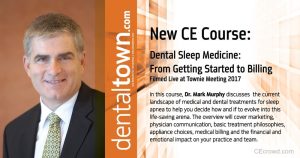
Dental Sleep Medicine: From Getting Started to Billing. Filmed Live at Townie Meeting

A case-based update on the recognition, diagnosis and an evidence-based, systematic approach to the treatment of xerostomia.

Cysts may be commonly seen clinically and radiographically in the oral region and, as such, are imperative for all dental professionals to recognize and understand.

Performing soft tissue biopsies is one of the simplest surgical procedures to perform, yet general practitioners only perform 17% of all soft tissue biopsies. This course will give the attendee a simple 5 step cookbook for performing the biopsy – from patient evaluation through postoperative instructions.

This course will allow the general practitioner to survey the current landscape of medical and dental treatments for sleep apnea and decide how and if they want to evolve into this life saving arena.

This dynamic session will teach you about oral cancer through a dentist's journey as a patient and give you strategies so you can be part of the solution.

This course will allow the general practitioner to survey the current landscape of medical and dental treatments for sleep apnea and decide how and if they want to evolve into this life saving arena.

This course is a call to action for all dental professionals who are dedicated to prevent sleep disordered breathing (SDB) rather than wait to treat the devastating effects it imposes.

This course describes what is evidence and why it is important when making clinical decisions, the principles of evidence-based dental practice and their rationale.

Fluorescence Enhanced Theragnosis™ – the next generation diagnosis, treatment guidance and treatment goal achievement, disinfection and photobiomodulation for oral healthcare.

Trauma is the most common cause of pain-related temporomandibular disorders (TMD). Dr. Schiffman presents current evidence-based diagnostic criteria and management techniques.

This evidence-based presentation will have all dentists performing the comprehensive dental examination clinically and didactically better than ever before.

Despite observing the ability of carious dentin to remineralize as arrested caries, dentists continue to treat caries by amputation rather than pharmacologically supporting the remineralization process.