

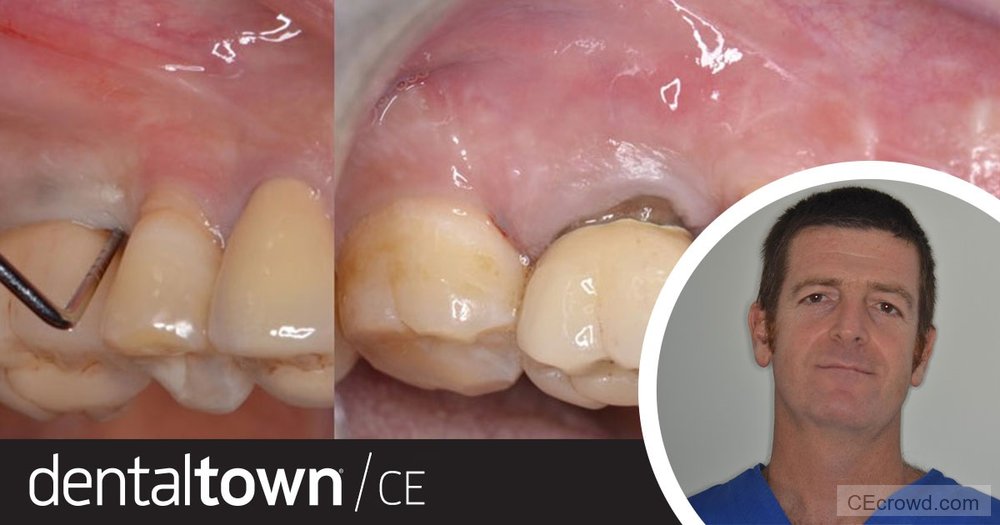
Osseous Resective Surgery by Dr. Giacomo Tarquini
About This Event
Periodontal disease attacks the underlying or supportive bony architecture and this resorptive process often results in a crestal osseous form with sharp, uneven marginal deformities and irregularities: crestal bone maintains these irregularities, whereas the gingival tissue tends to follow a more fluid form.
These inherent differences result in deep pockets that can be probed. Osseous resective surgery (ORS) is dedicated to the removal of osseous deformities and the creation of a physiologic parabolic contour; a physiologic osseous form will mimic the final anticipated gingival architecture and this osseous contour will be conducive for pocket elimination and maintenance of physiologic gingival architecture.
Also, ORS is aimed at treating teeth with moderate to advanced furcation involvement: they represent one of the greatest challenges in periodontal therapy since furcation-involved molar teeth respond less favorably to conventional periodontal therapy.
In all these cases, the underlying osseous topography is probably the most important aspect of the diagnostic and prognostic path, so 3D digital imaging can be of great help for the clinician in order to make a correct morphologic diagnosis. Clinical crown lengthening will be also addressed: it refers to procedures designed to increase the extent of supragingival tooth structure for restorative or aesthetic purposes that often employ some combination of soft tissue reduction or removal, osseous surgery, and/or orthodontics for tooth exposure in order to provide a stable dentogingival complex by preserving the supracrestal tissue attachment.
Distal wedge procedures represent an additional topic of this CE Course: distal wedge procedures are designed primarily to eliminate the pocket by facilitating access to and treatment of the distal bone defect at the last tooth in the dental arch and, secondly, to make it possible to preserve or create ideal amounts and thicknesses of keratinized gingiva. This CE Course is aimed to clarify the role of all these success factors as well as to describe the biologic rationale and clinical protocols which are the basis of osseous resective surgery for the treatment of various grade of bone defects. When it comes to the surgical approach, a clinical flow chart leading to the right choice among the details of ORS protocols is presented and each surgical procedure will be showed following a “step by step” approach with the help of a large number of pictures and clinical videos. Clinical potential, effectiveness and limits of ORS compared with other surgical techniques will be discussed on the basis of speaker’s personal experience and in the light of most recent high level scientific evidence.
Learning Objectives
- Familiarize with biological concepts of osseous resective surgery
- Understand when and why performing osseous resective surgery
- Make a biologically-oriented choice in order to select what type of bone defects are the best candidates for osseous resective surgery
- Treat any kind of bone defect according to the osseous resective surgery principles
- Understand biologic width and principles of surgical clinical crown lengthening