
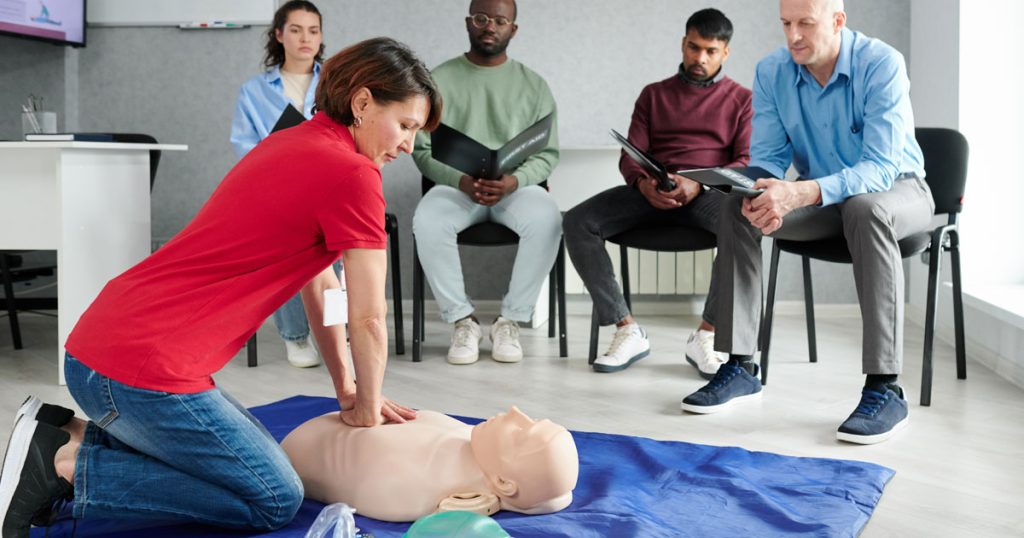
Medical emergencies dental CE can be surprisingly tricky because “what counts” depends on your state board, your license type (dentist, hygienist, assistant), and sometimes the course format. Many boards accept medical emergency training delivered in-person or as a live webinar, but some restrict mandated-topic credit from self-paced courses, or require specific elements like real-time attendance verification, a post-test, or clearly defined learning objectives. The safest approach is to verify three things before you register: (1) the course content aligns with what boards mean by “medical emergencies in the dental office,” (2) the delivery format matches your board’s rules (live vs virtual vs on-demand), and (3) you’ll receive audit-ready documentation. This guide gives you a fast framework, real examples, and a simple checklist so you can choose the right course and keep proof that stands up in an audit.
Why “medical emergencies CE” causes confusion
“Medical emergencies” is one of the most common mandated-topic labels in dentistry—and one of the easiest to misinterpret. Two courses can sound identical on a checkout page yet be treated differently by a regulator based on the category, format, or documentation provided.
Three common reasons courses get rejected in audits
- Wrong category: The course title or description never clearly ties training to managing emergencies in the dental setting.
- Wrong format: Your board requires live (in-person or synchronous) learning, but the course is on-demand/self-paced.
- Weak proof: Your certificate lacks key fields (hours, date, provider, format) or you can’t show attendance/completion verification.
What boards generally mean by “medical emergencies” CE
Boards vary, but most expect training that prepares dental teams to recognize, respond to, and document a medical emergency in the office. Think practical readiness, not just general health education.
Core content that typically aligns with “medical emergencies in the dental office”
- Recognition and immediate response: ABCs, assessing consciousness, vital signs, patient positioning, activating EMS.
- High-frequency scenarios: syncope, anaphylaxis, hypoglycemia, asthma/bronchospasm, chest pain/MI, stroke, seizures.
- Emergency drugs and equipment: what to stock, when to use it, and how to store/maintain supplies.
- Office protocols: roles, checklists, documentation, post-event debrief, and quality improvement.
- Team communication: delegation, closed-loop communication, and rehearsal/drills.
Content that may not count (or may count only if clearly tied to emergency response)
- General risk management or malpractice lectures without clinical emergency training
- Broad medical updates not connected to dental office response protocols
- OSHA or infection control content (important, but usually a different mandated topic)
Live vs virtual vs on-demand: the format rules that matter
Format is where most “counted/not counted” surprises happen. A course can be excellent and still not satisfy your board if it doesn’t meet delivery requirements.
Common delivery formats (and what they usually mean)
- In-person live: lecture, workshop, hands-on simulation, drills.
- Live virtual (synchronous webinar): real-time participation at a scheduled date/time.
- On-demand/self-paced: recorded content completed anytime.
- Hybrid/blended: a mix (for example, on-demand module plus a live Q&A).
Comparison table: which format is easiest to defend in an audit?
| Format | Typical acceptance pattern | Best for | Proof to keep | Common risk |
|---|---|---|---|---|
| In-person live | Often broadly accepted for mandated topics | Hands-on skills, team drills, simulation | Certificate + agenda/outline + instructor credentials | Losing paperwork (agenda/outline) after the event |
| Live virtual (webinar) | Often accepted, but some boards require strict attendance verification | Live instruction with Q&A; efficient compliance | Certificate stating “live webinar” + attendance log/timestamps if available | Certificate missing delivery format or no proof of live attendance |
| On-demand/self-paced | May be accepted, may be limited, or may be excluded for mandated topics | Flexibility, quick completion | Certificate + completion timestamps + post-test score (if offered) | Board requires live/synchronous for this topic |
| Hybrid/blended | Often accepted when the live component is clear and documented | Deeper learning with flexible prep | Separate proof for each component + clear total hours | Unclear hour breakdown or missing proof for the live portion |
A simple framework to verify “what counts” before you buy
Use this quick sequence to avoid unpleasant surprises. It’s designed for real-world shopping: you can run it in five minutes on most CE listings.
Step 1: Confirm the mandated category for your license type
Start with your board’s renewal requirements for your role. Dentists, hygienists, and assistants can have different mandated topics, hour minimums, and format rules—even in the same state.
Step 2: Confirm the course is actually “medical emergencies in the dental office” training
Look for a course description that explicitly covers recognition and response protocols in a dental setting. If the title is vague, check the learning objectives and outline.
Step 3: Confirm the format fits your board’s rule (live vs virtual vs on-demand)
If your board requires live learning, verify whether “live webinar” counts as live. Some boards treat synchronous webinars as live; others use “live” to mean in-person only. When in doubt, choose a live format that includes attendance verification.
Step 4: Confirm you will receive audit-ready documentation
This is where many clinicians get stuck: the course was fine, but the proof is incomplete. Before you register, verify what will appear on the certificate and whether the provider can supply an agenda/outline.
Audit-proof documentation: what to keep (and how to store it)
In an audit, you’re usually asked to prove three things: who you are, what you took, and that you completed it for the claimed hours.
Checklist: build an audit-ready “proof packet”
- Certificate of completion with: your name, course title, completion date, total CE hours, provider name, and delivery format (in-person, live webinar, on-demand).
- Course outline or agenda showing topics covered and time/hours.
- Learning objectives (often embedded on the course page—save as PDF).
- Instructor credentials (speaker bio, credentials, or faculty page screenshot).
- Attendance or completion verification (webinar attendance record, completion timestamps, post-test score, or confirmation email).
- Receipts/registration confirmation (helpful if course access expires later).
Red flags that can weaken your documentation
- The certificate lists hours but not the course date.
- The course title is generic (for example, “Safety Training”) with no mention of medical emergencies.
- The delivery format isn’t stated anywhere.
- There is no outline or learning objectives available.
Examples: does this course count?
These examples show how boards typically evaluate courses. Use them as patterns, then apply your board’s rules for the final answer.
Example 1: In-person workshop with emergency drills and simulation
Usually counts: This is the most defensible option for “medical emergencies” because it’s clearly training for in-office response. Save the certificate plus the workshop agenda and any drill/checklist materials.
Example 2: Live webinar titled “Medical Emergencies in the Dental Office” with Q&A
Often counts: Live virtual training is frequently accepted, especially when attendance is tracked. Make sure the certificate states live webinar (or synchronous), and keep any attendance confirmation email or timestamp report if available.
Example 3: On-demand course with a post-test and completion tracking
Sometimes counts, sometimes limited: Many boards accept on-demand CE for general hours, but some restrict mandated topics to live learning. If you choose on-demand, prioritize courses with clear objectives, a post-test, and time-stamped completion records.
Example 4: CPR/BLS renewal course
It depends: CPR/BLS is essential training, but it may be categorized separately from “medical emergencies CE” by some boards. If your board explicitly allows CPR/BLS to satisfy the medical emergencies requirement, keep the CPR card/certificate plus the course outline and hours.
Example 5: Sedation-focused emergencies course (nitrous/oral/IV)
May count, but check category: If it focuses on managing sedation complications and emergencies, it can align with emergency management. However, some boards want this logged under sedation-specific CE rather than the general medical emergencies mandate.
Multi-state licenses: minimize duplicate hours
If you hold licenses in more than one state, the goal is to meet the strictest rule once and keep documentation that works everywhere.
Use the “highest common denominator” approach
- If any state requires live learning for mandated topics, choose an in-person or live webinar format.
- Pick courses with strong documentation (clear title, objectives, format, and hours).
- Keep separate renewal folders by state and cycle, even if the course overlaps.
Pitfalls to avoid (and quick fixes if you already took the course)
Pitfall: assuming any healthcare emergency course will qualify
Boards typically want the dental-office context. If a course is generic, save the outline and highlight sections that clearly address dental practice response protocols.
Pitfall: the course is live, but your certificate doesn’t say it
Fix: ask the provider for an updated certificate that explicitly lists the delivery format (in-person or live webinar) and the total CE hours.
Pitfall: you rely only on a certificate
Fix: download the agenda, learning objectives, and speaker bio while you still have access. If the course portal expires, you may lose the supporting documents you need later.
Pitfall: self-paced course accepted for general CE, but not for mandated topics
Fix: if your deadline is close, choose a live webinar option to remove ambiguity, then keep the attendance proof.
Fast workflow: verify a course in 5 minutes
- Check the title and learning objectives: Does it explicitly cover medical emergencies response in the dental office?
- Confirm the format: In-person, live webinar, or on-demand? Is that format allowed for mandated topics in your state?
- Confirm audit-proof documentation: Will the certificate list date, hours, provider, and delivery format?
- Save supporting documents now: agenda/outline, objectives, speaker bio, attendance proof.
- When unsure: email the provider and ask for a sample certificate and verification method.
Copy/paste questions to ask a CE provider
- Does the certificate state the delivery format (in-person, live webinar, or on-demand) and the total CE hours?
- Can you provide an agenda/outline or learning objectives showing medical emergencies content?
- For live webinars, do you track attendance and can you provide verification if requested?
- For on-demand courses, do you provide completion timestamps and a post-test score (if applicable)?
FAQs
Does CPR/BLS count as medical emergencies dental CE?
Sometimes. CPR/BLS may be required separately or may be allowed to satisfy medical emergencies depending on the board. Confirm how your board categorizes it before relying on it for the mandate.
Do live webinars count as “live” medical emergencies CE?
Often, yes—especially when attendance is verified. Some boards use “live” to mean in-person only, so confirm the rule for your state and license type.
Will an on-demand medical emergencies course be accepted?
It depends on your board. On-demand may be accepted for general CE hours, but some regulators restrict mandated-topic credit to live learning formats.
What documentation should I keep for an audit?
At minimum: certificate with required fields plus an agenda/outline or learning objectives. Stronger proof includes attendance logs or completion timestamps and post-test results.
How long should I keep CE records?
Keep them for at least the time period required by your board, and consider keeping a digital archive beyond that if you maintain multiple licenses.
Conclusion: choose the course you can prove
The safest way to meet a medical emergencies dental CE mandate is to match the content, match the format, and keep audit-ready proof. If your board’s rules are unclear or you hold multiple licenses, a live format (in-person or live webinar) with strong documentation is often the least risky path.
Next step: Browse medical emergencies CE options, confirm the delivery format for your board, and save your documentation packet the same day you complete the course.